Poetry
Why Poetry Matters in Everyday Life: An Explainer
Somewhere in most days there is a gap. The kettle is boiling and you are standing at the window with nothing to do for ninety seconds. Or you are on the bus, or lying in bed with the light still on, waiting for sleep. Poetry fits into gaps like that. It does not require an hour, a course, or a special chair — only about as long as it takes to drink a glass of water.
Poetry Is a Way of Paying Attention
A poem is a piece of writing that has decided to slow down. That is most of what it does. Where a news report pushes forward, a poem stops at the kitchen table and looks at it: the chipped corner, the ring left by a mug, the way the afternoon light lands on the wood. Read enough of them and the habit starts to spread outward.
This is not mystical. Attention is a muscle, and it responds to use. A poem about a window makes you look at your own window. A poem about a neighbour's dog makes you hear the dog two doors down, the one that barks at six. Mary Oliver built a whole body of work out of that kind of looking, and Ted Kooser has spent decades writing short, plain poems about weather, roads, and the people living near him. Neither is asking you to become a monk. They are asking you to look at what is already there.
Try it once. Read a single poem in the morning, then go and look out of a window for thirty seconds with no phone in your hand. That small pairing — poem, then world — is the whole practice in miniature.
Why Evening Suits Poetry
Evening thoughts have a different texture from morning ones. In the morning the mind is practical: keys, trains, the first message. By evening it starts sorting — replaying a conversation, worrying at a decision, drifting back ten years for no clear reason. That drift is not a flaw in you. It is the mind reviewing its own footage.
A poem gives that review somewhere to go. Fifteen minutes with a book before bed can replace some of the scrolling that leaves you more wired than when you started. Not always, and not as a rule you must obey. But often enough to be worth keeping a book on the nightstand and the phone across the room.
Evening also helps because nobody is watching. You can read the same poem four nights running. You can read it badly, half-distracted, and find one line. You can read a line, put the book down, and think about your mother for a while. None of this needs to be reported to anyone.
You Do Not Need to Understand It
Most people who say they don't get poetry were taught it as a puzzle with a correct answer hidden at the back of the book. That approach leaves a mark. It makes adults wary of short lines and white space, as though a poem might ask them a question they cannot answer.
Drop the puzzle. A poem is closer to a room than a riddle. You walk in, you notice what you notice, you leave when you like. Some rooms you will want to return to; others you will pass by without regret. That is not failure. That is reading.
A poem is not a test you can fail. It is a room you can walk into and sit down in.
If you want a way in, keep three questions in your head and ask them after a first reading:
- What did I notice? An image, a sound, a word that repeats.
- Where did I slow down? That is often where the poem is doing its real work.
- What stayed with me? A phrase, a feeling, a detail you can still picture.
Then read it again. Almost every poem gives up more on the second pass, and the second pass takes ninety seconds.
Five Small Ways In
You don't need a syllabus. You need a few low-friction habits that survive busy weeks:
- Keep the book where the gap is. If you read in bed, the book lives on the nightstand, not on a shelf downstairs.
- Read one poem twice. Once for the sound, once for the sense. This alone solves most of the confusion people feel.
- Choose slim books. A hundred-page selected poems feels finishable. A nine-hundred-page complete works does not, and it will sit there judging you.
- Let a poem-a-day habit do the choosing. A magazine you trust may send one to your inbox; libraries and secondhand shops are full of anthologies that do the same job.
- Give it two minutes, not twenty. If a poem isn't working, close the book. There are thousands more, and no committee is keeping score.
Two Habits Worth Keeping
Read It Out Loud
Poems are built for the mouth. Reading aloud slows you to the speed of the line, and you hear the rhymes, repetitions, and pauses you would otherwise skim past. Read quietly if there are people in the next room. Read to a dog, a plant, an empty kitchen. The point is simply to let your ear do some of the work your brain has been straining at.
Copy a Line by Hand
Keep a notebook and copy one line that caught you. Not the whole poem — one line. Copying forces you to notice the punctuation and where the line breaks, which is where a lot of a poem's meaning actually lives. Over a few months the notebook becomes a record of what you were paying attention to, which is a quiet and fairly accurate kind of diary.
Writing a Little Yourself
Writing is the fastest cure for being intimidated by poetry, because it shows you how the machine works. Nobody has to read what you produce. Three exercises, each under ten minutes:
- The object poem. Pick something within reach — a mug, a key, a shoe. Write six lines about it without using a single adjective.
- The list poem. Write down everything on the table right now, one item per line. Read it back. Lists turn out to be more moving than they have any right to be.
- Six lines to someone. Write to a person who is far away or gone. Don't send it. Don't rhyme unless a rhyme arrives on its own.
Most of what you write will be unremarkable, and that is exactly what happens to everyone. The useful part is the noticing, not the result.
Start Tonight
You do not need a plan, a reading list, or a better chair. You need one book and ten minutes before bed.
- Find a slim anthology — from your own shelf, a library, or the stack beside the bed of the person you live with.
- Open it at random. Read one poem silently, then read it again out loud.
- Copy a single line you liked into a notebook or the notes app on your phone.
Then close the book and go to sleep. Tomorrow, do it again with a different poem, or the same one if it's still working on you. Within a week you'll have seven lines and a slightly better ear. Within a month, you'll have a small record of your evenings and a habit that costs almost nothing and gives back more than most of what fills the day.
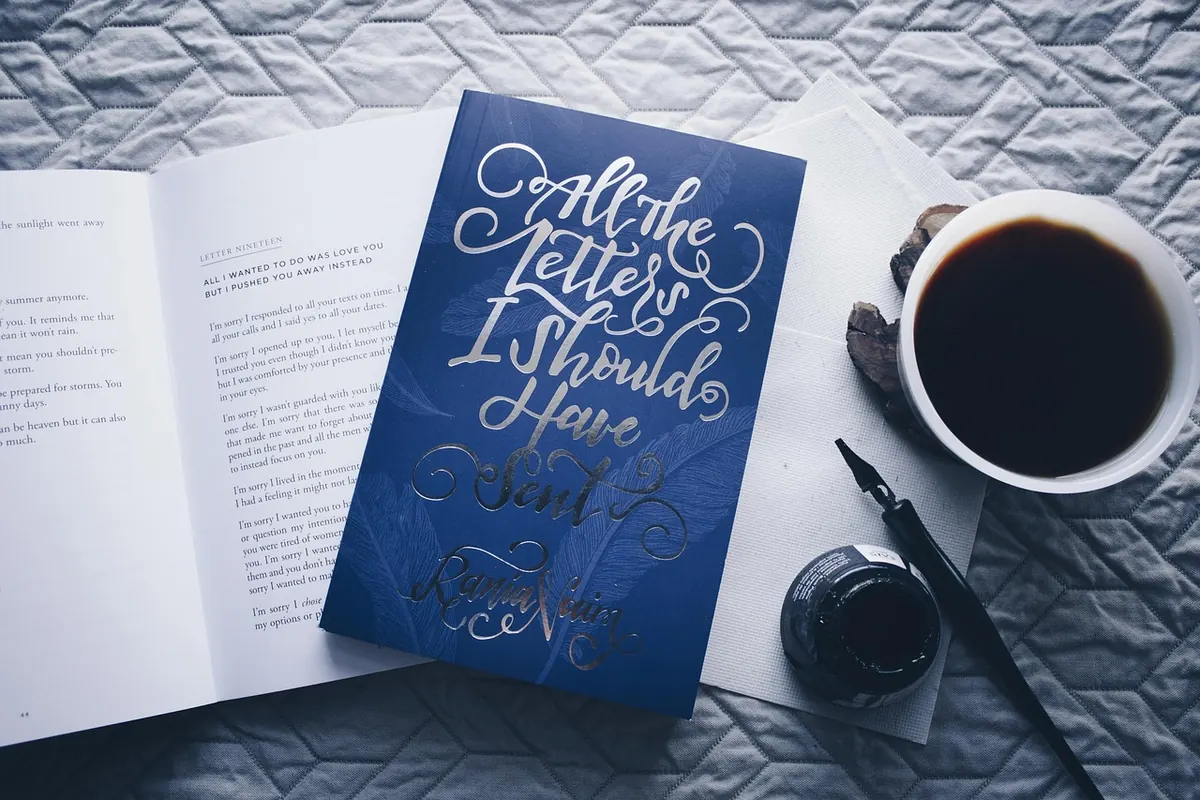
Photo: ThoughtCatalog / Pixabay